Roof Repair vs. Full Replacement in Rockford, IL: How to Know Which One You Need
In Rockford, a roof that looks like a repair candidate in July can become a full replacement by October — because freeze-thaw cycles accelerate hidden damage faster than in warmer climates. Making the wrong call costs you either way: an unnecessary replacement drains your budget, while a delayed one lets winter water intrusion compound the damage.
This framework walks you through the six factors that actually drive the decision, with concrete thresholds and local context built in.
Does Your Roof's Age Already Answer the Question?
A 20-year-old asphalt roof in Rockford is often a replacement candidate even when visible damage looks minor, because the material is near the end of its serviceable life in this climate.
Standard 3-tab asphalt shingles last 20–25 years nationally, but Rockford's freeze-thaw cycles effectively subtract 2–3 years from that window. Architectural shingles run 25–30 years, with the same climate adjustment. Once your roof crosses those thresholds, isolated damage is rarely worth patching — the surrounding material is already degraded, and a repair simply delays the inevitable while adding cost.
If you don't know the installation date, check your home's permit history or ask a contractor to estimate age by granule loss and shingle brittleness. That single data point often settles the debate before you assess damage at all.
How Much of the Roof Is Actually Damaged?
When damage covers 25–30% or more of the total roof surface, full replacement almost always makes more financial sense than patching, regardless of roof age.
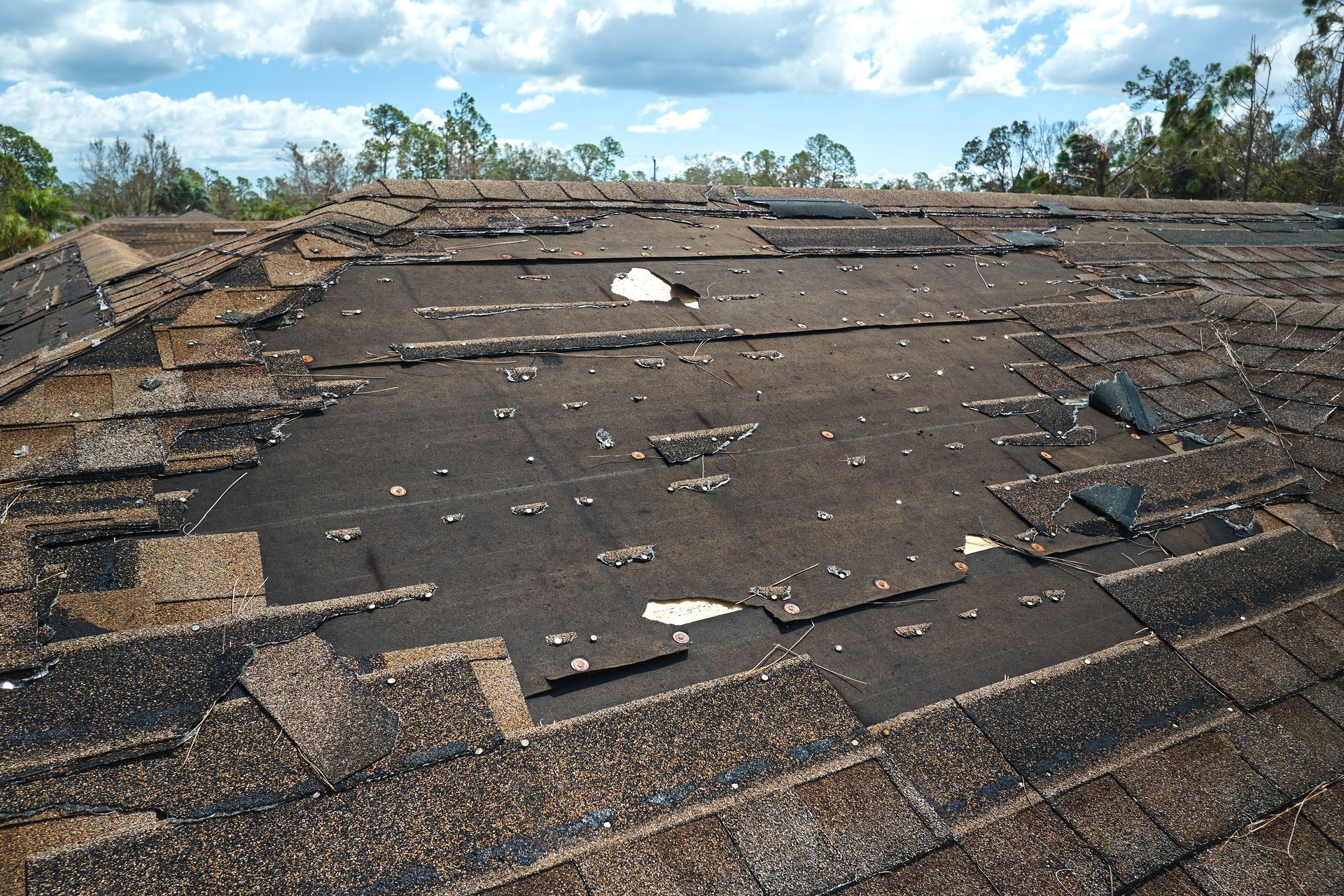
For missing shingles specifically: 1–3 missing in one zone is typically repairable. Missing shingles across multiple areas, or more than roughly 10% of your total shingle count, signals a replacement evaluation. Granule loss follows the same logic — a bare patch near one valley is repairable, but widespread bare spots mean the shingles have shed most of their UV and weather protection.
Sagging, soft spots, or visible deck deflection are automatic replacement signals. Those indicate structural compromise that no surface repair can address.
What Is Happening Under the Shingles?
Underlayment and deck condition are the hidden factors that most homeowners miss — and in Rockford's climate, they're often what converts a repair into a full job.
If the underlayment is wet, torn, or absent in sections, a shingle repair is cosmetic only. Water is already reaching the deck, and patching the top layer doesn't stop it. Rotted decking requires full replacement regardless of shingle age, because new shingles can't be fastened properly to compromised wood.
Heavy snow loads common in northern Illinois can stress a deck that already has soft spots, making the damage worse before you even see it from the outside. Only a professional inspection reveals the underlayment and deck condition — a visual walk-around from the yard won't show you what's happening beneath the surface.
Are You Stuck on the Repair Treadmill?
Repeated repairs in the $300–$800 range over two to three years can easily exceed the cost difference between continued patching and scheduling a full replacement sooner.
A useful rule of thumb: if your cumulative repair spending has reached or is trending toward 30% of a new roof's cost, replacement is the better financial decision. You're paying to maintain a declining asset rather than investing in a durable one. Factor in that each repair visit also carries labor minimums and the risk that the contractor finds additional damage once they're on the roof.
Does Insurance Cover Repair and Replacement Differently?
Yes — insurance adjusters evaluate repairs and replacements by different criteria, and the timing of your claim matters more than most homeowners realize.
Repairs are typically easier to approve for isolated, clearly storm-caused damage. Full replacement approvals hinge on documented widespread damage, roof age, and proof that the roof cannot be 'restored to pre-loss condition' through repair alone. Attempting a repair before filing a claim can reduce your payout, because you've altered the evidence the adjuster needs to assess. For help navigating your insurance claim and understanding how adjusters document storm damage, it pays to know the process before you start any work.
Age and depreciation also affect replacement payouts — an older roof may receive an actual cash value settlement rather than full replacement cost, depending on your policy terms.
How Does Rockford's Climate Make This Decision Harder?
Rockford's combination of freeze-thaw cycles, heavy snow, Midwest hail seasons, and ice dam risk creates a faster deterioration environment than most national roofing guides account for.
Freeze-thaw cycles cause shingle materials to expand and contract repeatedly through winter, accelerating granule loss, cracking, and flashing separation. What looks like a minor flashing gap in October can admit water that freezes, expands, and pries the gap wider by February. Ice dams — common along Rockford eaves — signal underlying ventilation and insulation problems that a shingle repair won't fix. If you've had recurring ice dams, the cause is above the attic, not at the shingle surface.
Midwest hail events frequently cause internal shingle bruising that isn't visible from the ground. A repair addresses the cracked or missing pieces on the surface while leaving the structurally compromised shingles in place, where they'll fail prematurely. Proper drainage after any roof work also matters — gutters and downspouts that can't handle snowmelt or heavy spring rain accelerate the damage cycle all over again.
Timing Around Illinois Winters: Why Fall Decisions Matter
The best installation windows in Rockford are April–June and August–October, when temperatures allow shingle adhesive to seal properly and crews aren't working around ice or compressed daylight.
Cold-weather installation is possible, but adhesion is slower and the risk of improper sealing increases. More importantly, a roof showing clear replacement signs in September should not be deferred to spring — that means weathering an entire Rockford winter on a failing system, with snow loads, ice dams, and freeze-thaw all working against you. Emergency repairs can bridge a gap, but they're a temporary hold, not a substitute for the full job your roof needs.
Letting a Professional Inspection Drive the Call
A professional inspection is the only way to assess underlayment condition, deck integrity, and true damage extent — the three factors most likely to change the repair-vs.-replacement answer.
DIY assessments from the yard or a ladder miss the details that determine whether surface repairs will hold. An inspector will check shingle condition, flashing, valleys, penetrations, and the attic interior for signs of moisture intrusion. That full picture gives you the data to make a confident decision and document the condition for an insurance claim if needed.
A solid inspection report also protects you if you're planning to sell — a visibly patched roof with mismatched shingles raises flags for buyers and can complicate FHA or VA loan approvals. A replacement, by contrast, shows up on an inspection report as a clean asset.
Getting a clear, professional assessment is the fastest way to stop guessing and start acting with accurate information. Schedule your roof evaluation with Top Notch Roofing & Exteriors and find out exactly where your roof stands before the next Rockford winter sets in.